 Weidian Spreadsheet Worldwide
Home › Smart buying
Buying sense that travels across every platform
The previous page covered Weidian's own quirks. This one holds the checks that stay true on Taobao, 1688 or anywhere else an agent shops for you.
Vetting a seller from outside China
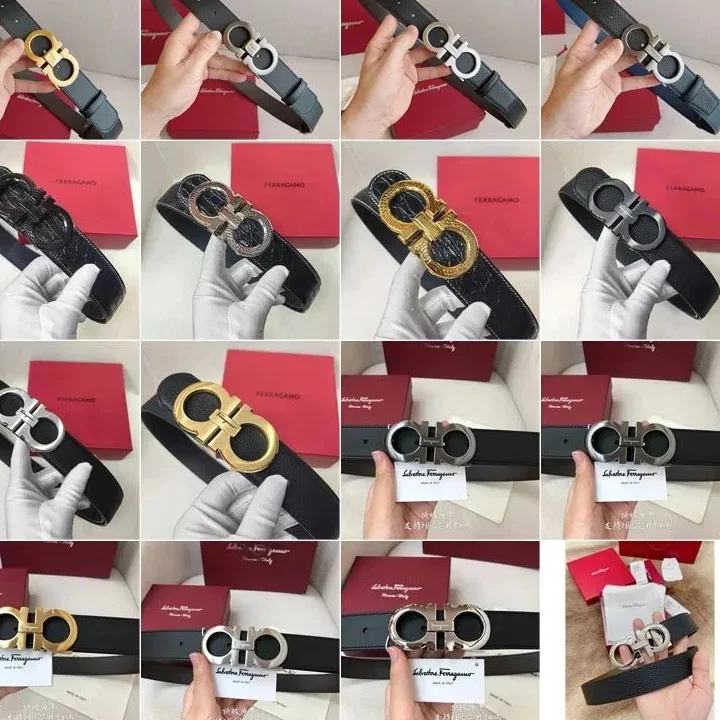
Distance removes your usual tools, so replace them deliberately. Depth of presentation is the first substitute: a seller who photographs options systematically, publishes measurements and keeps consistent lighting is showing you their operation, not just their goods. The sales card in the figure is a real example; its dozens of labelled squares tell you this seller expects informed buyers and repeat orders.
The second substitute is responsiveness through your agent. One relayed question before payment tests the whole chain: the shop's speed, the agent's diligence, and whether ambiguity gets resolved in writing. The third is longevity: a shop page with seasons of history outranks a fresh one with prettier photos, because history is the one thing a careless seller cannot photograph.
Price is the weakest signal of the four, in both directions. A suspiciously low figure usually resolves to the cheapest spec of a range rather than a scam, and a high one often buys packaging, not construction. Let price break ties between sellers who already passed the other three checks, and never let it recruit a seller who failed them.
Choosing the piece, not just the picture
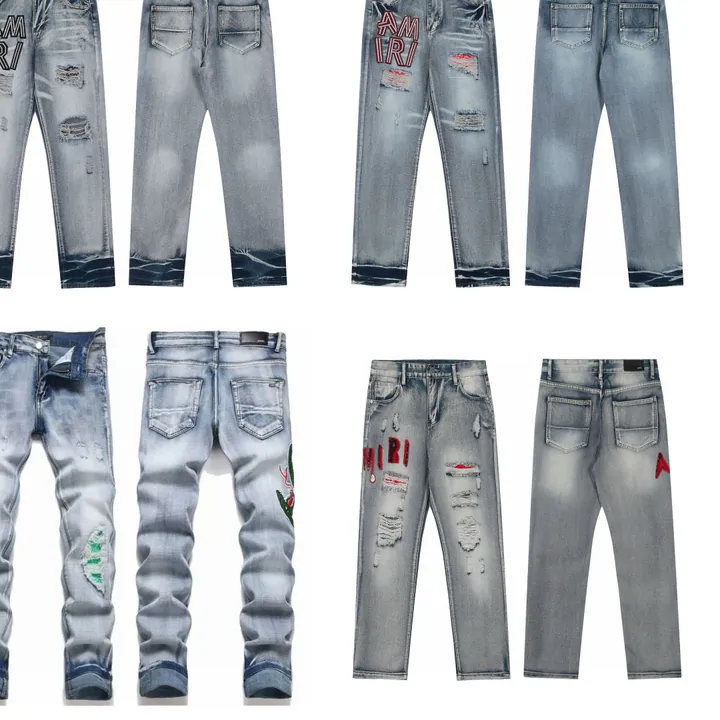
Judging a find before you order comes down to three translations. Translate the photo into a spec: which exact wash, print or colourway, named or screenshotted. Translate the fit into numbers: a measurement you took from a garment you own, compared against anything the listing publishes. Translate the price into a landed total: item plus the freight its weight class implies, which the costs page makes mechanical.
The pieces that disappoint are rarely the wrong product; they are the right product in the wrong variant or size. That is a translation failure, and it is prevented at the keyboard, before any money moves, by people willing to write one extra sentence in an order note.
Photos deserve one grain of salt each. Studio shots flatter fabric; collage cards hide scale; a tag draped over a garment proves the tag, not the stitching. The photos that predict satisfaction are the boring ones, flat lays with a tape in frame, and when a listing lacks them the warehouse can supply them later, which is the quiet advantage of this whole routing over ordinary mail order.
Checks that belong before the payment
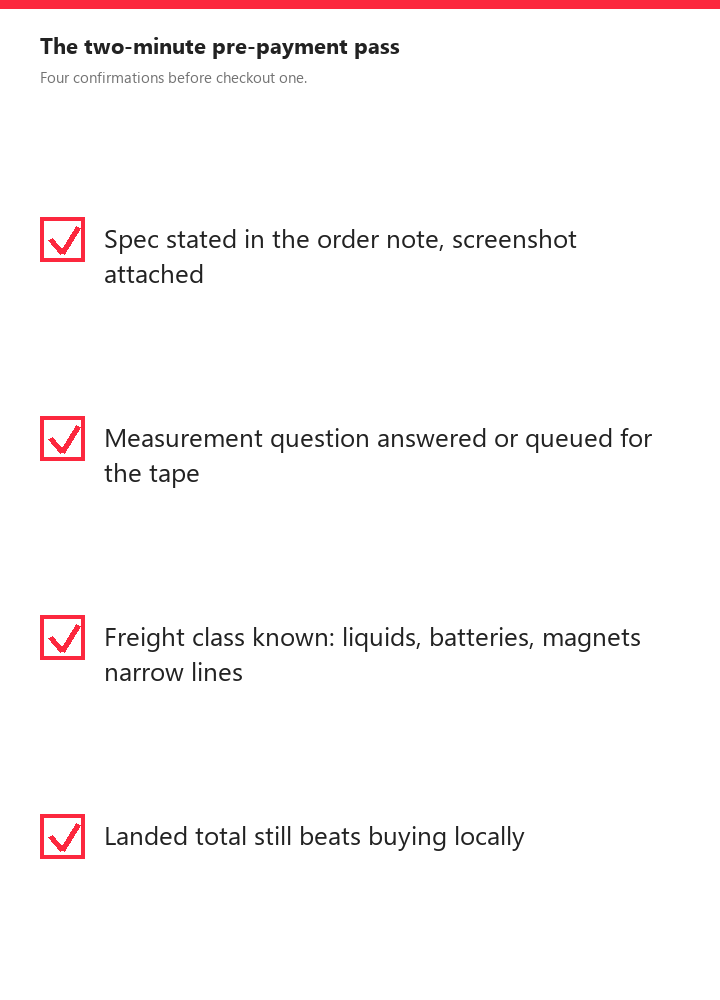
A pre-payment pass takes two minutes and catches most of what refunds take weeks to repair. Confirm the spec is stated in the order note, by screenshot if the menu is numbered. Confirm the measurement question is answered or queued for the warehouse tape. Confirm the item's freight class: liquids, batteries and magnets narrow the line menu, and knowing that before checkout one prevents a parcel that can legally never leave.
Then confirm the arithmetic: the landed estimate still makes sense against simply buying locally. Sometimes it does not, and the honest conclusion is to skip the order. A catalog that never tells you to close the tab is selling you something other than information.
The pass earns the most on mixed boxes. One restricted item quietly reshapes the whole shipment: a single perfume bottle moves an entire box of clothes onto slower liquid-capable lines, and one power bank can do the same for batteries. When the pass flags a freight-class conflict, the fix is usually to split the order across two boxes with two line choices, decided now, while splitting costs a thought instead of a repack fee.
The one check that outranks all of these: never approve warehouse photos you have not zoomed into. The reading order takes ninety seconds per set.